EN
EN

What is a cantilever beam weighing sensor
2026/08/13
Learn about cantilever beam weighing sensors, their applications, and benefits in industrial settings.
2026/08/19
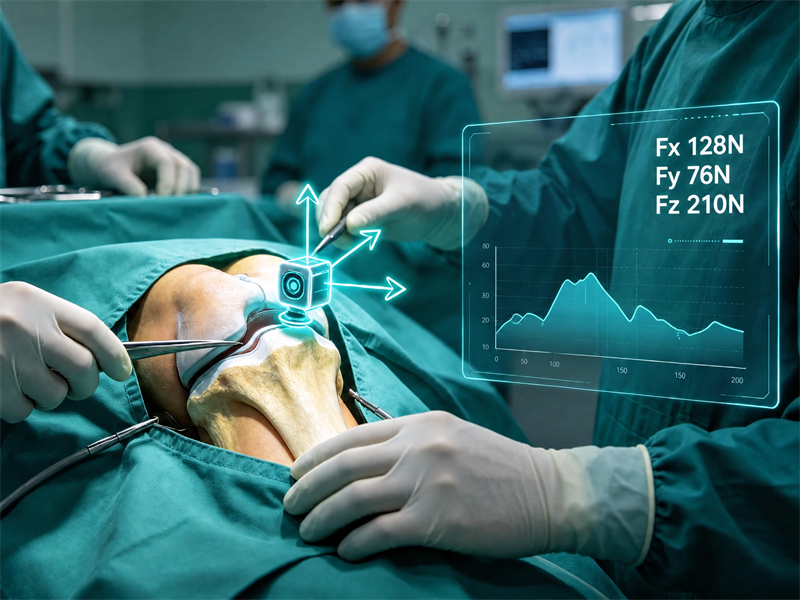
Micro weighing sensors (also called miniature load cells, micro force sensors, or micro-gravimetric sensors) are compact transducers that measure force or mass with high precision within constrained mechanical envelopes. In medical devices, they serve two broad functions: direct mass/weight measurement (e.g., dialysate balancing, tablet weighing, neonatal monitoring) and inferred force/pressure measurement (e.g., infusion-pump occlusion detection, surgical robot haptics, tissue palpation). The global medical sensors market is projected to grow at a CAGR of 7.9% from 2025–2030, with MEMS-based sensors holding the largest revenue share in 2025 due to their compact, low-power, high-precision characteristics suitable for wearable and portable medical devices.
Strain Gauge Load Cells
The most widely deployed technology. A metal foil strain gauge bonded to a flexure element changes resistance under mechanical deformation, measured via a Wheatstone bridge circuit.
Accuracy: ±0.03–0.25% of full scale
Resolution: ~1/20,000
Strengths: Fast response, mature supply chain, low-to-moderate cost, good durability with protection
Weaknesses: Adhesive creep, temperature drift, hysteresis, mechanical fatigue, requires periodic calibration
Medical applications: Infusion pump occlusion detection, dialysis fluid balancing, tablet hardness testing, general-purpose force measurement
Piezoresistive MEMS Sensors
Silicon-based micro-machined sensors in which piezoresistive elements embedded in a diaphragm change resistance under stress.
Accuracy: ±0.1–0.5%
Response: Extremely fast
Strengths: Very high precision, miniaturizable, low energy consumption, suitable for catheter-tip and invasive applications
Weaknesses: Temperature sensitivity, fragile semiconductor construction, higher cost
Medical applications: Invasive blood pressure monitoring, catheter-tip pressure sensing, minimally invasive cardiac/intracranial/renal pressure monitoring.
Capacitive Sensors
Measure force via changes in capacitance between parallel plates as a flexure deflects.
Accuracy: ±0.05–0.2%
Response: Very fast
Strengths: High accuracy, good for low-force precision measurement
Weaknesses: Sensitivity to humidity and contamination, EMI shielding requirements, critical mechanical alignment
Medical uses: Precision low-force measurement, laboratory analyzers the company
Electromagnetic Force Compensation (EMFC)
Operates on a null-balance principle: gravitational force is counteracted by a Lorentz force generated by a current-carrying coil in a magnetic field. The compensation current is proportional to mass.
Resolution: Up to 1 part in 10⁷ (e.g., 0.01 µg to 1 kg)
Strengths: Several orders of magnitude higher accuracy than strain gauges, excellent long-term stability
Weaknesses: Larger form factor, higher power consumption, higher cost, limited load capacity (a few grams to a few kilograms)
Medical applications: Analytical balances in clinical laboratories, pharmaceutical R&D, reagent dispensing requiring microgram precision
Tuning Fork / Vibrating Wire Sensors
Measure mass via changes in resonant frequency of a vibrating element.
Resolution: 1/3,000,000
Long-term stability: 1/200,000 (superior to both strain gauge and EMFC)
Strengths: Digital output (no A/D conversion needed), extremely low power consumption, strong noise resistance, no warm-up required
Medical uses: High-precision laboratory weighing, pharmaceutical quality control VIBRA
Fiber Bragg Grating (FBG) Sensors
Optical sensors in which the wavelength of reflected light shifts under strain or temperature.
Strengths: EMI-immune (critical near electrosurgical equipment), ultra-miniaturizable, multiplexable, biocompatible
Medical applications: Three-axis force sensing in 4 mm-diameter surgical forceps, bilateral micro-operation systems, and flexible endoscopic surgical robots where electrical sensors cannot be accommodated. A standalone 4-DOF FBG force/torque sensor has been mounted near the tip of 4 mm forceps.
| Technology | Accuracy | Resolution | Response | Size | Cost | Primary Medical Use |
| Strain Gauge | ±0.03–0.25% | 1/20,000 | Fast | Small–Medium | Low–Med | Infusion pumps, dialysis, pharma |
| Piezoresistive MEMS | ±0.1–0.5% | Very high | Extremely fast | Ultra-small | High | Invasive pressure, catheters |
| Capacitive | ±0.05–0.2% | High | Very fast | Small | Med–High | Lab precision, low-force |
| EMFC | 1/10⁷ | 0.01 µg | Moderate | Medium–Large | High | Analytical balances, lab R&D |
| Tuning Fork | 1/3,000,000 | High | Fast | Small | Med–High | Precision lab weighing |
| FBG (Fiber) | High | High | Fast | Ultra-small | High | Surgical robots, endoscopic |
Infusion Pumps & Syringe Pumps
This is the single largest application for micro force sensors in medical devices.
Occlusion detection: A load cell or force-sensitive resistor (FSR) is installed under a section of IV tubing. When a blockage occurs (kinked line, clamped tube, downstream obstruction), the tubing expands and exerts increased force on the sensor, triggering an alarm. A 100 g load cell is commonly integrated for this purpose.
Dosage regulation: Force sensors monitor the mechanical load on peristaltic pump mechanisms to ensure correct flow rates across continuous, intermittent, and patient-controlled modes.
Wearable insulin pumps: the company's FS10 Miniature Force Sensor, a surface-mount compression load cell, is specifically designed for medical infusion pumps, wearable insulin pumps, and ambulatory devices. the company
AI-enhanced detection: Recent research developed a Bagging classifier model using force sensor data from CSII (continuous subcutaneous insulin infusion) pumps to detect infusion failures, outperforming conventional occlusion alarm thresholds. The dataset included 251 boluses.
Dialysis & Renal Replacement Therapy
Gravimetric fluid balancing is the gold standard for ultrafiltration (UF) control.
Dual-load-cell system: Fresh dialysate (inlet) and spent dialysate (outlet) containers are each placed on load cells. The weight difference over time equals the net ultrafiltration removed from the patient. The system feedback-controls the effluent pump to achieve the prescribed UF rate.
CRRT accuracy requirement: Machines must achieve <2.5% error in UF volume measurement. Gravimetric balancing scales are considered preferable to flow-based measurements, especially in pediatric CRRT where low body weight (6.9–11 kg) demands extreme precision.
Infant hemodialysis: Research protocols use balances sensitive to 0.1 g changes, calibrated to ±1 g, weighing all dialysate, replacement fluid, and waste bags.
Surgical Robotics & Haptic Feedback
This is the fastest-growing and most technologically demanding segment.
The force feedback gap: The da Vinci surgical system, which dominates robotic surgery with sub-millimeter precision and 7-DOF arms, has historically lacked force feedback—surgeons couldn't feel tissue resistance and had to rely solely on visual cues.
Recent FDA clearance: Intuitive Surgical received FDA 510(k) clearance (K253986) for da Vinci Force Feedback Instruments on March 11, 2026, classified as Class II under 21 CFR 876.1500, marking a major milestone.
Miniature sensor integration: FUTEK manufactures miniature medical sensors specifically for robotic surgery, while research explores FBG-based 3-axial force sensors for flexible endoscopic robots where size constraints preclude electrical sensors.
Artificial palpation: Sensor-equipped robotic tips with bi-modal haptic actuators (pneumatic balloons for graded normal force + vibrotactile feedback) enable tissue characterization and tumor localization.
Pharmaceutical Manufacturing & Quality Control
Tablet hardness testing: A highly sensitive load cell (typically up to 50 kg capacity) applies incrementally increasing force until a tablet fractures, measuring the breaking force in Newtons. This is mandated by pharmacopeial standards (EP <2.9.8>, USP <1217>). Interface's MCC Miniature Compression Load Cell is small enough to fit inside tablet hardness testers.
Multi-parameter tablet testing: Automated 5-in-1 instruments (e.g., Pharma Test PTB 330, SOTAX AT50, ERWEKA EasyCheck) integrate a weighing cell with hardness, diameter, thickness, and width measurement in a single workflow, compliant with EP and USP for uniformity of mass.
Checkweighing: In-line precision weighing verifies capsule and tablet fill weights at production speeds.
Neonatal & Pediatric Care
Incubator weight monitoring: IoT-integrated load cells in neonatal incubators provide real-time weight tracking for premature infants, integrated with oxygen level monitoring and early-warning systems.
Pediatric CRRT: As noted above, low patient weight demands gravimetric systems with 0.1 g sensitivity.
Laboratory & Diagnostic Equipment
Reagent dispensing: EMFC or capacitive micro-sensors enable microliter/nanoliter reagent dispensing in clinical chemistry analyzers, immunoassays, and PCR systems.
Micro-gravimetric bio/chemical sensing: Resonant cantilevers functionalized with nanoporous materials detect trace-level bio/chemical molecules for rapid on-the-spot diagnostics.
Wearable & Implantable Devices
Wearable insulin pumps and ambulatory infusion devices require surface-mount micro force sensors (e.g., TE FS10) for occlusion detection in compact, battery-powered form factors. the company
Flexible pressure/strain sensors based on MXene/polymer composites, PEDOT:PSS, or iontronic materials enable skin-conformal monitoring of respiratory rate, carotid pulse, muscle activity, and joint motion. A PEDOT:PSS piezoresistive sensor achieved sensitivity of 4×10⁵ kPa⁻¹ within 100 kPa.
Continuous glucose monitoring (CGM): Although electrochemical rather than gravimetric, CGM patches integrate with insulin pump force-sensing systems in closed-loop "artificial pancreas" architectures. The healthcare MEMS sector is growing at a CAGR of 10.81% through 2031, driven significantly by CGM and drug delivery.
Market Size & Growth
Global medical sensors market: Growing at a 7.9% CAGR (2025–2030).
MEMS in healthcare: Growing at a CAGR of 10.81% through 2031, the fastest-growing vertical.
MEMS for therapeutic devices (2025):
Drug Delivery MEMS: $652.92M (52.23%)
Sensing & Monitoring MEMS: $418.65M (33.49%)
Microfluidic Devices: $178.43M (14.27%) PW Consulting
Asia-Pacific biomedical sensors: $2.56 billion (2025) → $3.74 billion (2030), CAGR 7.84%. China's MEMS localization subsidies are a key growth driver (+0.7% CAGR impact).
Biosensors segment: Valued at $987.7 million in 2024.
Regional dominance: North America contributes ~30.8% of global market growth.
Key Manufacturers
| Company | Headquarters | Key Medical Products |
| FUTEK Advanced Sensor Technology | USA | Miniature medical load cells for robotic surgery, occlusion sensors, custom force/torque sensors, metal foil strain gauge technology (30+ years) |
| the company | Switzerland | FS10 Miniature Force Sensor (infusion/insulin pumps), IntraSense MEMS catheter pressure sensors, 1620 AAMI-compliant disposable pressure sensors, FX1901 compression force sensor (10–200 lbf, disposable medical to durable equipment) |
| Interface Force Measurements | USA | MCC Miniature Compression Load Cell (tablet hardness), SMTM Overload Protected Micro S-Type (19×19×6.35 mm), medical device design & testing |
| HBM (Hottinger Brüel & Kjær) | Germany | Precision measurement, load cells, signal conditioning; strong in pharmaceutical and medical device testing |
| Kistler Group | Switzerland | Piezoelectric force sensors, high-frequency dynamic measurement |
| the company | USA | Force/pressure sensors for medical, aerospace, industrial |
| HITEC Sensors (Humanetics) | USA | Force sensors for infusion pump occlusion and dosage regulation |
| VIBRA | Japan | Tuning fork sensors for high-precision medical/laboratory weighing |
| FUTEK, the company, and Interface are the three most prominent players specifically targeting medical-grade micro weighing/force sensing.Dataintelo | ||
FDA (United States)
Class II (medium risk) is the typical classification for force-sensing medical devices, requiring 510(k) premarket notification demonstrating "substantial equivalence" to a predicate device.
Example: da Vinci Force Feedback Instruments (K253986) — Class II, 21 CFR 876.1500, cleared March 2026.
The Quality System Regulation (21 CFR 820) governs design controls, production, and testing; it incorporates ISO 13485:2016 by reference.
ISO Standards
ISO 13485:2016 — Medical device quality management systems, the global baseline for sensor suppliers serving medical OEMs.
IEC 60601 series — Electrical safety and essential performance for medical electrical equipment (applies to sensor-integrated devices).
AAMI standards — For disposable blood pressure sensors (e.g., the TE 1620 series is AAMI-compliant).
Pharmacopeial Standards
EP <2.9.8> and USP <1217> — Tablet hardness testing methods and acceptance criteria.
Uniformity of mass requirements for dosage forms.
Key Regulatory Challenges for Sensor Suppliers
Sensors used as components in medical devices must be manufactured under ISO 13485 and provide full traceability.
Biocompatibility (ISO 10993) is required for sensors that come into contact with tissue or body fluids.
Sterilization compatibility—sensors must withstand autoclaving, ethylene oxide (EtO), or gamma irradiation, depending on the application.
Long-term stability data must support the device's intended service life.
AI-Integrated Smart Sensors
Machine learning models are being deployed directly on force sensor data to improve detection accuracy. For example, a Bagging classifier using CSII pump force data detected infusion failures more reliably than fixed threshold alarms. AI also enables gesture recognition, motion classification, and early disease detection from wearable strain/pressure data.
Flexible & Skin-Conformal Sensors
MXene/polymer composites and PEDOT:PSS piezoresistive sensors enable breathable, skin-compatible wearables for continuous respiratory, pulse, and muscle monitoring.
Iontronic pressure sensors with gradient microstructures inspired by human skin achieve broad-range, high-resolution force detection for human-interactive perception.
Porous CNT/PDMS nanocomposite sensors monitor muscle function and relative skeletal muscle mass index for rehabilitation and sarcopenia assessment.
Multimodal Sensing
Sensors that simultaneously measure pressure, temperature, and humidity reduce device footprint and enable richer clinical data. Pressure-temperature dual-modal flexible sensors are being developed for smart wound care and e-skin applications.
Fiber Optic (FBG) Sensing for Surgery
FBG sensors solve the EMI problem near electrosurgical tools and enable force sensing in sub-5 mm endoscopic instruments. This is a key enabler for the next generation of flexible surgical robots.
Biocompatible Implantable MEMS
The adoption of biocompatible MEMS sensors for implantable devices is a confirmed growth driver, adding +0.90% to the MEMS market CAGR forecast, with expansion from North America/Europe into Asia-Pacific.
Self-Powered & Energy-Harvesting Sensors
Research into self-powered wearable sensors that harvest energy from body motion or physiological signals aims to eliminate battery constraints for long-term chronic disease monitoring.
Key Challenges
Tradeoff between size and accuracy: Shrinking sensor dimensions typically reduces resolution and increases noise. FBG and MEMS technologies are the primary paths forward.
Long-term drift and calibration: Strain gauge sensors require periodic recalibration, which is problematic for implanted or sealed devices.
Sterilization durability: Repeated autoclaving or gamma irradiation can degrade sensor bonding and electronics.
Cost at scale: High-precision EMFC and FBG sensors remain expensive, limiting adoption in cost-sensitive disposable applications.
Regulatory latency: Force feedback in surgical robots took over two decades from concept to FDA clearance (da Vinci, March 2026), reflecting the high bar for safety evidence.
Environmental sensitivity: Humidity, temperature, and EMI remain persistent challenges for capacitive and piezoresistive technologies in clinical environments.
Future Outlook
The convergence of AI + flexible sensors + wireless connectivity will drive growth in remote patient monitoring and chronic disease management.
Force feedback in surgical robotics is now an FDA-cleared reality and will become a standard feature, creating significant demand for ultra-miniature multi-axis force sensors.
Closed-loop drug delivery systems (artificial pancreas, automated anesthesia) will increasingly rely on micro force/pressure sensors for real-time safety interlocks.
Personalized and precision medicine demands ever-higher resolution in reagent dispensing and diagnostic weighing, favoring EMFC and tuning fork technologies in laboratory settings.
The Asia-Pacific region—particularly China—is emerging as both a major growth market and a manufacturing hub, with government subsidies accelerating MEMS sensor localization.
2026/08/13
Learn about cantilever beam weighing sensors, their applications, and benefits in industrial settings.

2026/08/10
Learn how to efficiently install a weighing sensor on your silo for accurate measurement and monitoring.
Get in touch for customized load cell & linear sensor solutions, technical testing support, or global wholesale cooperation.
Tel
Address
No. 1 Tianfu Road, Zhanggong District, Ganzhou City, Jiangxi Province, China